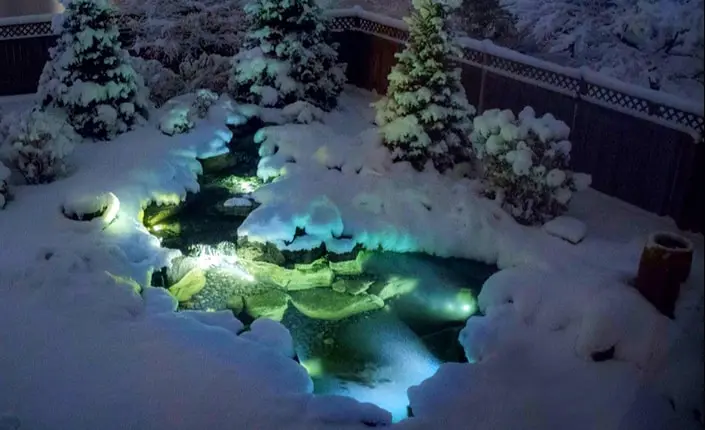
TL;DR – Quick Answer Box
Keeping a hole in your koi pond ice isn’t optional—it’s critical for your fish’s survival. Without an opening for gas exchange, toxic gases like carbon dioxide and ammonia build up while oxygen levels plummet. You’ve got options: pond de-icers (most reliable), aerators (most economical), running waterfalls (requires monitoring), or the hot water method (labor-intensive). Whatever you choose, never smash the ice with a hammer—those shockwaves can seriously harm or even kill your koi.
Winter’s coming to Morris County, and if you’re staring at your backyard pond wondering how you’ll keep your koi alive when everything freezes over, you’re asking exactly the right question. Winter pond care isn’t complicated, but it is absolutely critical.
Here’s the deal: a completely frozen pond isn’t just inconvenient—it’s potentially deadly for your fish. But with the right approach to winter pond care, you can keep your koi safe and healthy all winter long without breaking the bank or your back.
Let’s dive into everything you need to know about winter pond care and maintaining that crucial opening in the ice.
🧊 Why Your Koi Pond Needs a Hole in the Ice
Think of your frozen pond like a sealed room. Without ventilation, things get toxic fast.
When your pond ices over completely, several dangerous things happen:
Oxygen can’t get in. Your koi need to breathe, even in their semi-dormant winter state. Ice blocks fresh oxygen from entering the water through normal gas exchange at the surface.
Toxic gases can’t escape. Even though your fish aren’t eating and their metabolism has slowed way down, they’re still producing carbon dioxide. Plus, any organic debris on the pond bottom—leaves, uneaten food, fish waste—releases harmful gases like ammonia and methane as it breaks down. These gases need somewhere to go, and a solid sheet of ice traps them underwater.
The result? Water quality crashes. Your koi essentially suffocate in their own waste products. It’s not a pretty picture, and it happens faster than you’d think—especially in smaller or heavily stocked ponds. This is why proper winter pond care is so essential.
The good news is that you don’t need to keep your entire pond ice-free. A hole just a few feet wide is enough to allow proper gas exchange and keep your fish safe through even the harshest New Jersey winters.
❄️ Method 1: Pond De-Icers (The Most Reliable Option)
If you want to set it and forget it, a floating pond de-icer is your best friend.
How they work: These aren’t pond heaters—they don’t warm your entire pond. Instead, they generate just enough heat to melt and maintain a small opening in the ice, typically a few feet in diameter.
Why they’re great: De-icers are specifically designed for this job. Most have built-in thermostats that automatically turn on when temperatures approach freezing and shut off when it warms up. That means you’re not wasting electricity, and you don’t need to babysit your pond during cold snaps.
What to look for:
- 300-watt models work for most backyard ponds
- Stainless steel construction lasts longer than plastic
- A long power cord (20+ feet) gives you installation flexibility
- Built-in LED indicators so you know it’s working
Pro tip from the pros: Many experienced koi keepers in Bergen and Passaic counties run two de-icers on separate circuits. If one fails or you lose power to one outlet, you’ve got backup. It’s pond insurance, and when you’ve invested in quality koi, it’s worth every penny.
The downside: De-icers are the priciest option upfront, and they do add to your winter electric bill. But for peace of mind and reliable performance through polar vortexes and surprise cold snaps, most pond owners consider them essential equipment.
💨 Method 2: Pond Aerators (The Economical Choice)
Want to keep a hole in the ice while actually improving your water quality? An aerator might be your answer.
How they work: Aerators use an air pump (usually kept in your garage or shed) to push air through a tube to a diffuser stone in your pond. The constant stream of bubbles creates water movement that prevents freezing and simultaneously adds oxygen to the water.
The winter advantage: Unlike your regular pond pump which can freeze and crack in winter, aerators are designed to run year-round. The pump stays dry on land, so there’s nothing in the water to freeze and break.
Critical placement for winter: Here’s where most people mess up. In summer, you want your diffuser at the bottom of the pond to circulate oxygen throughout. But in winter, you need to move it shallower—about halfway to the surface or even closer.
Why? Because the warmest water in winter sits at the bottom where your koi are hanging out. If you leave your diffuser deep, you’ll mix that warm water with the frigid surface water, making your entire pond colder. Your fish won’t appreciate that.
Operating costs: Aerators are incredibly cheap to run—often under a dollar per month. Even if you ran one 24/7 all winter, you’d spend less on electricity than a couple trips to your favorite Denville coffee shop.
Bonus benefits: Spring cleanup is easier because the aerator keeps working on breaking down organic debris all winter long. You’ll also see healthier fish in spring since they had adequate oxygen all season. This is winter pond care that pays dividends year-round.
🌊 Method 3: Running Your Waterfall (Proceed with Caution)
Some Rockaway pond owners keep their waterfalls running all winter, and it can work—but it requires vigilance.
The theory: Moving water doesn’t freeze easily, so a running waterfall can maintain an opening near where the water returns to the pond.
The reality check: This method is high-maintenance and comes with real risks:
Risk #1 – Complete freeze-over: During extreme cold, even running water can freeze. If your waterfall ices up completely while it’s running, water will flow over the ice and out of your pond instead of into it. Wake up to find your pond half-empty and your pump running dry, and you’ve got an expensive disaster.
Risk #2 – Chilling the pond: Waterfalls act like giant heat exchangers. You’re pumping water up, exposing it to frigid air, and sending it back cold. This can actually lower your pond temperature more than if you’d just shut it down.
Risk #3 – Equipment damage: Most pond pumps aren’t designed for winter operation. Ice forming in the pump housing can crack it, and you won’t know until spring when you try to start it up again.
If you go this route: Check your pond daily—no exceptions. Keep a thermometer in the pond. And have a backup plan (like a de-icer standing by) for when temperatures plummet.
🔥 Method 4: The Hot Water Method (Old School but Effective)
Don’t have any equipment yet? Or did your de-icer fail during a cold snap? The hot water method is your emergency backup.
How it works: Heat a pot of water on your stove until it’s boiling. Take it outside and carefully set the pot on the ice—don’t pour the water onto the ice. Let the heat slowly melt through. Once you’ve created your opening, remove the pot without spilling hot water into your pond.
Why not pour it on? Two reasons. First, rapid temperature changes can shock your koi, especially if they’re near the surface. Second, it’s less effective than letting the heat transfer slowly through the pot’s contact with the ice.
The reality: This works, but it’s labor-intensive. In Sussex County, where we regularly see stretches of below-freezing weather, you might need to do this daily or every other day. That gets old fast, especially when you’re trudging through snow to your pond at 6 AM before work.
Best use case: This is perfect as a stopgap solution while you’re waiting for equipment to arrive, or if you’ve just discovered your pond frozen over and need to act immediately.
🚫 What NOT to Do: Never Break the Ice
I need to emphasize this because it’s the first instinct many people have when they see their frozen pond: Do not grab a hammer, shovel, or baseball bat and smash the ice.
Why it’s dangerous: Those impacts create shockwaves that travel through the water. Your koi have an organ system called the lateral line—essentially a series of sensors running along their sides that detect pressure, movement, and vibration in the water. It’s how they navigate and sense predators.
Hammering on ice sends violent vibrations through the water that can permanently damage this system. In severe cases, the shock can actually kill your fish. It’s basically like setting off explosives next to them.
Use your words: If someone else maintains your pond (a landscaper, family member, well-meaning neighbor), make absolutely sure they understand this rule. “Don’t break the ice” needs to be as fundamental as “don’t drain the pond.”
🎯 Combining Methods for Maximum Protection
Want bulletproof winter pond care? Many Morris County pond pros recommend pairing methods:
De-icer + Aerator: The ultimate combo. The de-icer ensures you maintain an opening even in brutal cold. The aerator provides continuous oxygenation and water circulation. Together, they cover all your bases and give your koi the healthiest possible winter environment.
Aerator + Hot Water Backup: If you’re budget-conscious, run an aerator all season and keep your teakettle ready for those occasional extreme cold snaps when the aerator alone might not keep up.
The key is redundancy. Equipment fails. Power goes out. Ice storms happen. Having a backup plan means your fish survive even when Murphy’s Law strikes.
📋 Frequently Asked Questions About Winter Pond Care
How big does the hole in the ice need to be?
A hole about 2-3 feet in diameter is plenty for most backyard ponds. You don’t need to keep the entire surface ice-free—just enough for adequate gas exchange. The size matters less than keeping it consistently open.
Can I use a pond heater instead of a de-icer?
They’re different tools for different jobs. Heaters are designed to warm large volumes of water (think tropical fish). For koi ponds, they’re overkill and expensive to operate. De-icers just prevent freezing in a small area, which is exactly what you need. Save your money and get the right tool.
What if my pond is only 2 feet deep?
Shallow ponds are trickier because they can freeze solid more easily. You’ll definitely need a de-icer, possibly a more powerful one than standard. If your pond regularly threatens to freeze completely, you might need to consider bringing your koi indoors for winter or looking into pond heating systems.
How do I know if my de-icer or aerator is working?
Most de-icers have LED indicator lights. For aerators, you should see bubbles breaking the surface. During a cold snap, go outside and verify you’ve got an opening in the ice. Check after major storms too—snow can accumulate and block your equipment.
Should I remove snow from the pond ice?
Yes, carefully. Snow blocks sunlight from any aquatic plants still active in your pond. Use a broom to gently sweep it off—remember, no hitting or hammering that could create damaging vibrations. Clearing snow around your de-icer or aerator hole helps maintain that opening too.
What’s the difference between a de-icer for koi ponds in New Jersey versus pond heaters?
Great question! A de-icer for ponds maintains just enough warmth to keep a small area ice-free for gas exchange—that’s perfect for cold-hardy fish like koi that naturally handle New Jersey winters. Pond heaters actually warm the entire water volume, which interferes with koi’s natural seasonal cycles and costs significantly more to operate. For Morris County winters, a de-icer is what you want.
How can I prevent my koi pond from freezing in Rockaway, NJ during extreme cold?
Even during Rockaway’s coldest stretches, you don’t need to prevent your entire pond from freezing—and you actually don’t want to. That ice layer acts as insulation. Focus on maintaining a hole for gas exchange using a 300-watt de-icer, placing an aerator at mid-depth, or combining both methods. Keep the warmest water at the bottom where your koi overwinter.
🏁 The Bottom Line on Winter Pond Care
Winter pond care—specifically keeping a hole in your koi pond ice—isn’t complicated, but it is non-negotiable if you want healthy fish come spring.
For most Parsippany and Denville pond owners, a quality de-icer paired with proper pond depth (at least 3 feet) handles everything winter throws at you. Add an aerator if you want to optimize water quality and you’ve got a setup that practically runs itself.
The investment is minimal compared to the value of your koi and the peace of mind knowing they’re safe all winter. No 2 AM worries about whether your fish will survive until morning. No spring heartbreak finding floaters when the ice melts.
Just healthy, happy koi waiting for warmer days ahead.
Need help winterizing your pond or setting up the right equipment for New Jersey’s winters? Atlantis Water Gardens has been keeping Morris County koi safe for years. We know exactly what works in our climate, and we can help you set up a system that protects your fish without breaking the bank. Reach out today—winter doesn’t wait, and neither should you.
Written By: Jesse Karbowski – Atlantis Water Gardens
Serving: Morris County, New Jersey (Rockaway, Denville, Parsippany) and surrounding Bergen, Passaic, and Sussex County areas
Thinking that you may want to add a feature and relieve some stress? Read more about different types below:
What Winter Pond Equipment Should Be Shut Down?
How Deep for Koi to Survive Winter in New Jersey? 5 Tips
Looking for more great tips, tricks and quality content? Check out our YouTube Channel!
Looking for more tips and tricks for your New Jersey pond or water feature?
How can I do fall pond maintenance in New Jersey? 7 steps