
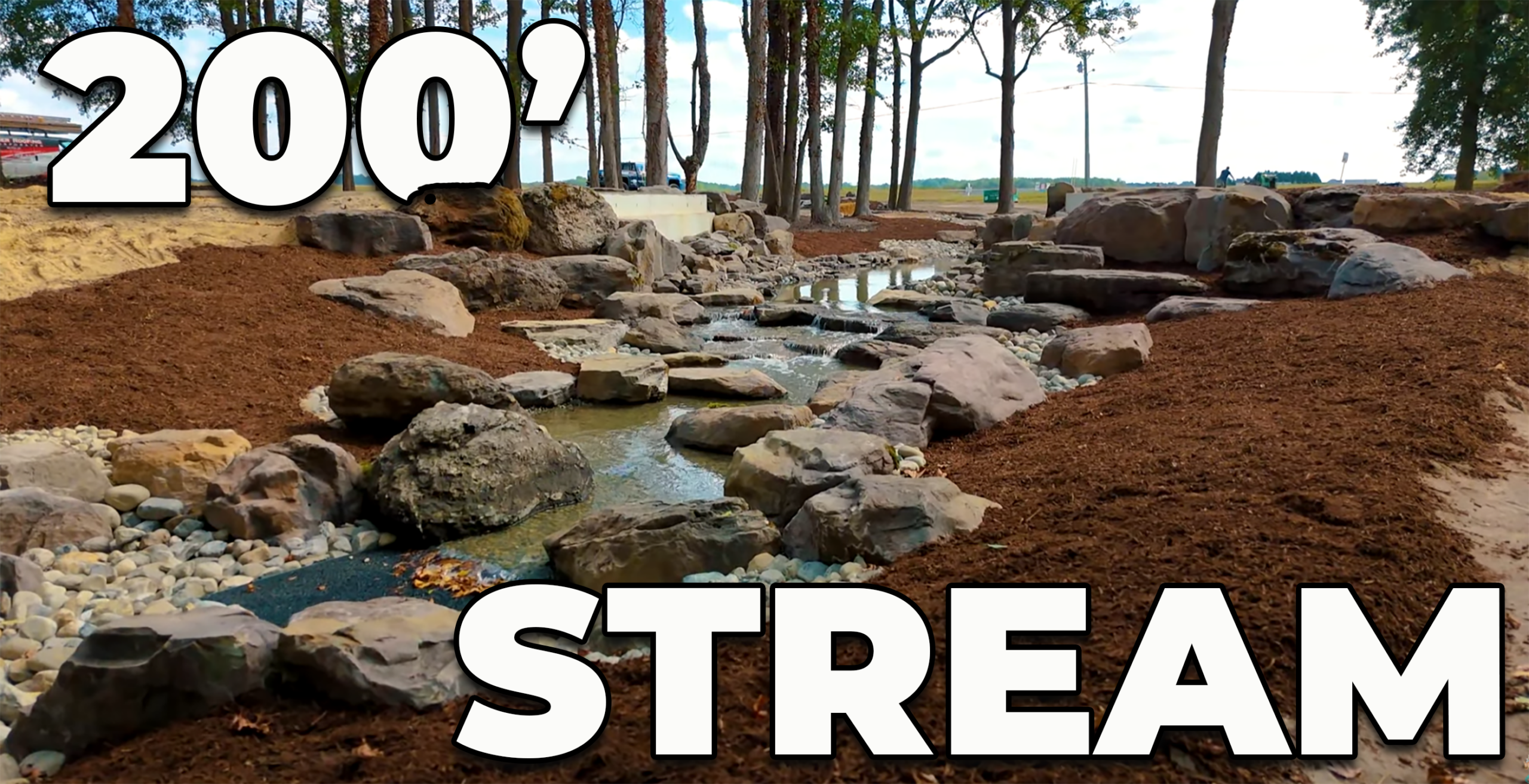
There’s something magical about pulling into your driveway and seeing water cascading over natural stone, flowing beneath a bridge, and disappearing into the landscape like it’s always been there. For homeowners in Denville, Parsippany, and throughout Morris County, a pondless waterfall stream transforms your property into a private retreat—without the maintenance headaches of a traditional pond.
🌊 TL;DR
A pondless waterfall stream uses a hidden underground reservoir to recirculate water through naturalistic rock formations, creating the look and sound of a mountain stream without standing water. Proper planning, quality materials, and thoughtful rock placement are what separate a stunning water feature from an obvious backyard project.
Why a Pondless Waterfall Stream Works for New Jersey Properties
Unlike traditional ponds, a pondless waterfall stream requires minimal maintenance and poses no safety concerns for families with young children or pets. The water disappears into a hidden reservoir at the bottom, gets pumped back to the top, and the cycle continues. You get all the sights and sounds of moving water without algae battles or predator worries.
These features also work beautifully on sloped properties—something many Sussex and Bergen County homeowners deal with regularly. Instead of fighting your terrain, you’re working with it.
7 Expert Tips for Building a Natural-Looking Pondless Waterfall Stream
1. Size Your Reservoir Right 💧
Your underground reservoir needs to hold enough water to fill your entire stream system plus extra capacity. For a 200-foot stream, you might need an 8,000-gallon reservoir built from aqua blocks covered with liner. The bigger your pondless waterfall stream, the more water storage you’ll need to make it function hydraulically.
2. Choose Rocks That Belong Here 🪨
Pennsylvania fieldstone boulders with their gray, brown, and subtle red tones look like they’ve always been part of the New Jersey landscape. Avoid imported stone that screams “I don’t belong here.” Mix large boulders with smaller cobbles to create those natural beach-washed edges that make everything feel authentic.
3. Hide the Plumbing Completely 🙈
Nothing ruins the illusion faster than visible pipes or liner edges. Run your pump lines underground and bring them into a diffuser area at the top. The goal is water that appears to well up from the earth naturally—not shoot out of a pipe. Use gravel and aqua blocks to diffuse water flow before it starts its journey downstream.
4. Create Multiple Falls, Not Just One 🏞️
A single dramatic drop looks artificial. Natural streams have low rolling cascades, deeper pools, and varying widths. Choke the water down to 2 feet wide in some spots to create thick, churning water. Open it up in others with flat stone layering for that gentle ripple effect. Your pondless waterfall stream should have character that changes as you walk alongside it.
5. Angle Your Rocks Intentionally 📐
How you tilt each stone determines where water flows. Tilt a rock forward and water shoots off the front. Tilt it back slightly and water rides up the surface before turning and sliding down the side—creating those beautiful natural turns. This is the difference between amateur hour and professional craftsmanship.
6. Bury the Bottoms of Your Boulders 🌱
Rocks sitting on top of the ground look placed. Rocks emerging from the earth look permanent. Bury the bottom third of your boulders and use gravel to hide where stone meets liner. In 2-3 years, ground cover will grow over the edges, and your pondless waterfall stream will look like it’s been there forever.
7. Plan for Interaction 👨👩👧
Flat stone areas along the edges invite people to sit, dangle their feet, or watch for frogs and salamanders. Kids will want to get close. Adults will want seating areas. Design your stream so people can actually enjoy it—not just look at it from the deck.
FAQ: Pondless Waterfall Streams in New Jersey
How much does a pondless waterfall stream cost in Morris County? Costs vary widely based on length, rock tonnage, and site conditions. A 200-foot stream with multiple waterfalls represents a significant investment—we’re talking about setting 200+ tons of rock. Contact Atlantis Water Gardens for an accurate estimate based on your property.
Can I build a pondless waterfall stream on a flat lot? Yes! We can create gentle grade changes or use the excavated soil to build elevation. Flat lots just require more earthwork during construction.
How much maintenance does a pondless waterfall stream require? Minimal compared to ponds. You’ll clean debris from the reservoir grate periodically and check pump function. No fish feeding, no algae treatments, no predator netting.
Will my pondless waterfall stream attract wildlife? Absolutely. Expect frogs, salamanders, crayfish, birds, and beneficial insects. Moving water is a magnet for wildlife throughout Passaic and Sussex counties.
Do I need to winterize a pondless waterfall stream? In New Jersey, most owners shut down their systems for winter. Drain the lines, pull the pumps, and store them until spring.
Ready to Transform Your Property? 💦
A well-designed pondless waterfall stream doesn’t just add beauty—it adds value, wildlife habitat, and a daily reminder that you made an amazing choice. The team at Atlantis Water Gardens has built water features throughout Morris County and beyond, from simple bubbling rocks to elaborate stream systems.
Contact us today to discuss your property and discover what’s possible.
Written By: Jesse Karbowski – Atlantis Water Gardens
Serving: Morris County, New Jersey (Rockaway, Denville, Parsippany) and surrounding Bergen, Passaic, and Sussex County areas
Thinking that you may want to add a feature and relieve some stress? Read more about different types below:
What Winter Pond Equipment Should Be Shut Down?
How Deep for Koi to Survive Winter in New Jersey? 5 Tips
Looking for more great tips, tricks and quality content? Check out our YouTube Channel!
Looking for more tips and tricks for your New Jersey pond or water feature?
How can I do fall pond maintenance in New Jersey? 7 steps