
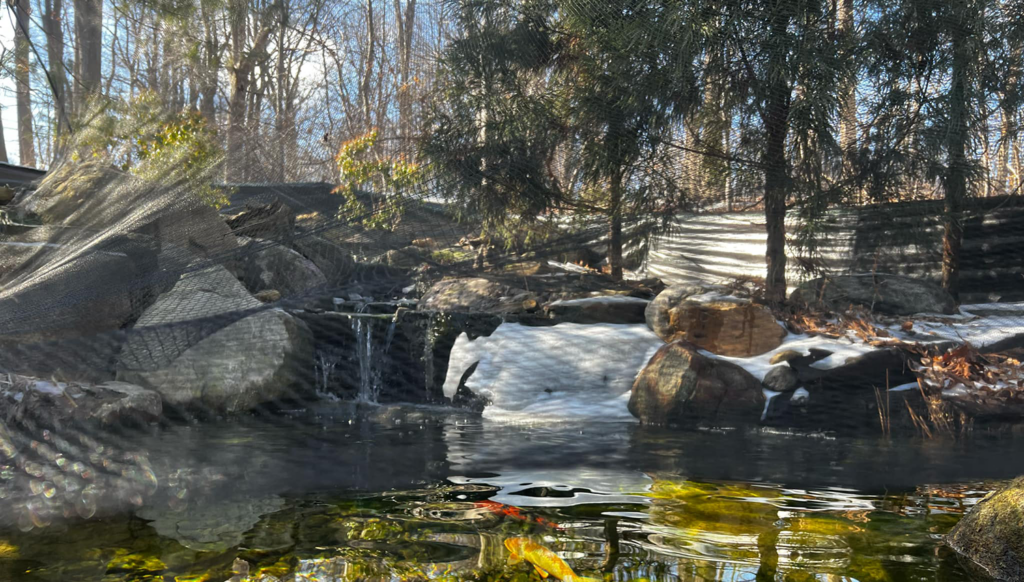
Pond Winterization in New Jersey: The Do's and Don'ts
Pond winterization in New Jersey is not complicated, but getting it wrong can cost you fish, crack your equipment, and turn spring startup into a disaster. Here is what to do and what to absolutely avoid before the first freeze hits.
Pond winterization in New Jersey is one of those things where the wrong advice is everywhere and the consequences show up months later when it is too late to fix them. Every spring we hear from pond owners who lost fish over winter or found cracked equipment in March, and almost every time the cause traces back to something that happened, or did not happen, back in October.
New Jersey winters are cold enough to be genuinely dangerous to an unprepared pond, but mild enough that koi can overwinter outdoors successfully when things are done right. That middle ground is actually the trickiest place to be. Here is exactly what to do and what to avoid.
Pond winterization in New Jersey means stopping feeding at the right water temperature, keeping gas exchange going through the ice, protecting your equipment before the freeze, and removing leaf debris before it sits all winter. The biggest mistakes are feeding too long, running the waterfall in freezing weather, and breaking ice by pounding on it. Get ahead of the freeze and your pond takes care of itself.
- Switch to cold water fish food below 65 degrees F
- Stop feeding entirely below 50 degrees F
- Net the pond before leaves start dropping
- Install a de-icer before the first freeze
- Keep an aerator near the surface for gas exchange
- Drain UV clarifiers and store them indoors
- Do a gentle partial water change in early fall
- Move hardy lily tubers to the deepest zone
- Remove and discard tropical plants before frost
- Trim back dying marginal plants
- Keep feeding regular food as temperatures drop
- Run your waterfall in freezing temperatures
- Shut everything down and ignore the pond all winter
- Pound or crack the ice to open a hole
- Leave UV clarifiers in the pond through winter
- Let leaves decompose at the bottom all winter
- Do a major disruptive cleanout right before the freeze
- Leave external plumbing filled with standing water
Koi are cold-blooded, and their digestive systems slow down dramatically as water cools. The problem is that their instinct to come to the surface when you approach does not. They will still beg for food at 45 degrees. They will still take a pellet from your hand. And they cannot digest it at all.
Undigested food sitting in a koi's gut through a cold New Jersey winter can cause bacterial infections that kill fish in January or February with no visible warning. The fish that seemed fine going into winter suddenly are not.
- Switch to a wheat germ cold water formula when water temperatures drop below 65 degrees F
- Feed every other day or less between 55 and 65 degrees F, only what fish finish in under 2 minutes
- Stop feeding entirely once water temperatures are consistently below 50 degrees F
- Use a pond thermometer, not the calendar or the air temperature — water temperature lags behind air temperature by days
Do not resume feeding on a warm November or December day just because the fish seem active. A single warm afternoon does not restore their digestive capacity. Wait until spring brings water temperatures reliably back above 50 degrees F before feeding resumes.
This is the single most consequential pond winterization decision a New Jersey pond owner makes, and the most commonly misunderstood. Your pond needs to breathe all winter. Not circulate heavily, not filter aggressively, but breathe.
Even in a dormant winter pond, biological activity is still happening slowly. Fish produce small amounts of waste. Organic matter decomposes. Those processes release gases like ammonia, carbon dioxide, and hydrogen sulfide that in an open pond simply escape into the air. In a pond that is completely frozen over, those gases have nowhere to go. They concentrate under the ice all winter and can reach lethal levels by February. This is called winter kill, and it is entirely preventable.
- Install a floating de-icer before the first hard freeze to maintain a small opening in the ice surface
- Add an aerator with the diffuser positioned near the surface, not at the bottom — you want gas exchange, not disruption of the warm bottom layer where fish rest
- Check that the opening in the ice is staying clear during sustained cold snaps
- Do not run your waterfall in freezing temperatures — it acts like a radiator, pulling heat out of the water and can cause ice dams and pump failures
- Do not turn off all equipment and check out until spring — minimal active management is fine, zero management is not
Never break a hole in the ice by pounding on it. The shockwave travels through the water and can stun or kill your koi. If your de-icer fails and the pond freezes over, place a pot of hot water on the surface and let it melt through slowly. Never impact the ice directly.
Water expands when it freezes. Anything that holds standing water and is left outdoors through a New Jersey winter is at risk, and the repairs are rarely cheap. Equipment protection is the part of pond winterization most people think of last, and it should be one of the first.
- Remove UV clarifiers from the pond, drain them completely, and store them indoors — the quartz sleeve cracks in a single freeze and replacements are expensive
- Drain any external plumbing, fittings, or valves that can hold standing water before freezing temperatures arrive
- If you are running a pump through winter, confirm it cannot ice over and check it periodically
Equipment warranties almost never cover freeze damage. A UV clarifier that cracks in November is a warranty claim that will be denied. Ten minutes of winterization prevents hundreds of dollars in spring replacements. It is the most cost-effective thing you can do right now.
Pond winterization in New Jersey happens in the middle of leaf season, and that is not a coincidence. Leaves that make it into your pond become the organic matter that decomposes all winter, producing the gases your de-icer is working to release. The less organic matter in your pond going into winter, the less work the season asks of your system.
- Net the pond before more leaves drop — a raised frame keeps leaves from sagging into the water
- Remove any leaf debris already at the bottom using a long-handled pond net or vacuum
- Trim back marginal plants like iris and cattails to just above the waterline before their dying foliage falls in
- Move hardy lily tubers to the deepest section of the pond so they stay below the freeze line
- Remove tropical plants entirely — water hyacinth, water lettuce, and banana plants will not survive a New Jersey winter
A gentle partial water change of 15 to 20 percent using dechlorinated water in early October lowers the overall organic load heading into winter and gives your fish a cleaner environment to slow down in. Low effort, genuinely useful.
Your regular pond bacteria becomes less effective as water temperatures drop. Cold water formulas are specifically designed to stay active in cooler conditions and keep breaking down organic waste during the temperature transition. That matters because the cleaner your water chemistry is going into winter, the less toxic gas buildup happens under the ice.
- Switch to a cold water beneficial bacteria formula in mid-fall when temperatures consistently dip below 55 degrees F
- Dose weekly through October and into November as long as water temperatures stay above 40 degrees F
- Use in conjunction with your de-icer, not instead of it — bacteria and gas exchange work together
This is one of the lower-effort, higher-payoff steps in New Jersey pond winterization. It costs very little and can make a real difference in water quality when spring arrives.
Your October Winterization Checklist
- Netting on the pond and waterfall area, raised frame so leaves do not sag in
- Feeding transitioned to cold water formula, schedule reduced by temperature
- Tropical plants removed and discarded before first frost
- Hardy lily tubers moved to the deepest pond zone
- Marginal plants trimmed back to the waterline
- Partial water change completed with dechlorinated water
- Cold water beneficial bacteria dosed on a weekly schedule
- UV clarifier drained and stored indoors
- External plumbing and fittings drained or protected
- De-icer installed and tested before the first hard freeze
- Aerator positioned near the surface for gas exchange
- Waterfall shut down for winter
Start pond winterization in New Jersey in early to mid-October, before the first hard freeze. You want netting down, feeding adjusted, cold water bacteria in place, and your de-icer or aerator ready before temperatures become consistently cold. Waiting until November puts you behind.
Yes, koi can absolutely overwinter outdoors in New Jersey provided the pond is at least 3 feet deep in at least one area, a de-icer or aerator keeps a hole open in the ice for gas exchange, and feeding has been properly wound down before temperatures dropped below 50 degrees F. Koi have been overwintering in New Jersey ponds successfully for decades.
In most New Jersey winters, yes. Running a waterfall in freezing temperatures acts like a radiator, pulling heat out of the water and exposing it to cold air. It can also cause ice dams, freezing damage to plumbing, and pump failures. Use a de-icer and aerator instead.
A completely frozen pond surface is a serious problem for koi. Without an opening in the ice, toxic gases produced by slow biological activity build up under the ice all winter and can reach lethal concentrations by late winter. This is one of the most common causes of unexplained winter fish loss in New Jersey ponds.
A gentle fall cleanout in early October is beneficial — removing leaf debris, trimming dying plants, and doing a partial water change. A full disruptive cleanout right before the freeze is not recommended. It removes beneficial bacteria colonies and stresses your fish during a vulnerable temperature transition.
Need netting, a de-icer, cold water bacteria, cold water food, or anything else to get your pond through the season? We have it all in stock right now. Come in before the freeze or give us a call.
Call us: 973-627-0515 ↗See it in action
Our YouTube channel covers real seasonal pond care and winterization tips for New Jersey pond owners.
Watch on YouTube ↗