Water Features · Outdoor Living
Pond vs. Pondless:
Which water feature is right for you?
The sound of moving water can completely transform a backyard — but choosing the right water feature means the difference between a garden showpiece you love and one that feels like a chore. Here’s how to decide.
Water Feature Guide · Spring 2025
There’s something almost magical about a water feature. The gentle trickle, the movement, the way it draws birds and butterflies to your yard. If you’ve been thinking about adding one, you’ve probably already come across the two most popular options: a traditional pond and a pondless waterfall. They look similar from a distance. But the life you’ll actually live with each one couldn’t be more different.
Let’s break it all down so you can walk into this decision with your eyes open — and your boots dry.
What exactly is a pondless waterfall?
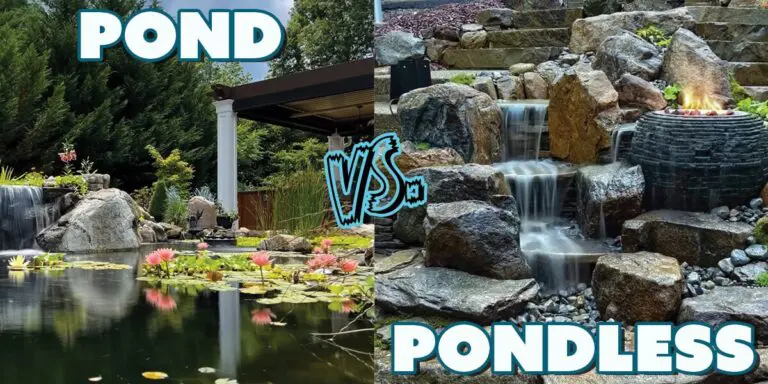
A pondless waterfall (sometimes called a disappearing waterfall) is exactly what it sounds like. Water cascades down over rocks and disappears into a gravel-filled basin at the bottom. Hidden beneath the surface is a reservoir and pump that continuously recirculates the water. No standing water exposed at the top. No pond for fish to live in. Just the movement and the sound — without the open basin.
“The pondless system gives you 90% of the sensory experience of a full pond at roughly half the maintenance commitment.”
The traditional pond: full immersion
A traditional pond is an ecosystem. Done right, it includes aquatic plants, fish, filtration, and a natural balance that sustains itself over time. Many homeowners with koi ponds say they become genuinely addicted to them — checking on the fish daily, adjusting plants, watching the system thrive. It becomes a living part of the yard, not just a decoration.
But that ecosystem requires stewardship. Algae happens. Fish get sick. Leaves fall in. Pumps need attention. Ponds are deeply rewarding, but they ask something of you in return.
Side by side: what matters most
Traditional Pond
Best for…
- Fish & koi enthusiasts
- Aquatic plant lovers
- Hands-on hobbyists
- Larger properties
- Full wildlife habitat
Pondless
Best for…
- Busy households & families
- Smaller yards or tight spaces
- Pet & child safety concerns
- Low-maintenance goals
- HOA-restricted properties
The questions that actually matter
Do you have young children or curious pets?
This is often the deciding factor for families. Open water — even a shallow decorative pond — presents a safety concern that many parents aren’t willing to take on. A pondless system eliminates standing water entirely. The basin is covered with decorative rock, so there’s nothing for a toddler or a golden retriever to fall into. If safety is on your mind, this answer writes itself.
How much time do you realistically want to spend maintaining it?
Be honest with yourself here. A pond in its prime is glorious. A neglected pond is a green, murky eyesore. If your weekends are already packed, or you travel often, a pondless system is far more forgiving. It still needs occasional attention — clearing debris, winterizing — but it won’t punish you for a few busy weeks the way a pond can.
Do you want fish?
If the answer is yes, you need a pond. Koi and goldfish require an established water column, filtration, and space to swim. A pondless system simply can’t accommodate them. But if the appeal is the sight and sound of water — not the fish themselves — a pondless feature delivers that experience beautifully.
What’s your budget?
Pondless systems typically cost less to install and significantly less to operate long-term. A traditional pond with full filtration, fish, and plants involves a larger upfront investment and ongoing costs for food, treatments, and occasional professional service. That said, both options are a meaningful investment — neither is the “cheap” choice.
What about maintenance in New Jersey winters?
If you’re in a northern climate, this matters. Pondless systems are generally easier to winterize — the pump comes out, the basin sits dormant, and you’re done until spring. A pond with fish requires careful management through the freeze-thaw cycle to keep the fish safe and the water oxygenated. It’s manageable with the right equipment, but it’s another layer of commitment to factor in.
“The right water feature isn’t the one that looks best on Pinterest. It’s the one that fits the life you’re actually living.”
So which one is right for you?
If you want a living ecosystem, love the idea of fish, and are genuinely excited about the hands-on nature of pond keeping — go with a traditional pond. You won’t regret it, and done well, it will become one of your favorite features of your property.
If you want the sound and movement of water, lower maintenance, and fewer worries about safety or travel — a pondless waterfall gives you a stunning result with far fewer demands on your time and attention.
Either way, you’re adding something to your outdoor space that will change how you use it. Water has a way of doing that.
Ready to explore what would work best in your yard? We’d love to walk the space with you.
See it in action
Not sure what a pondless waterfall actually looks like — or how a koi pond transforms a backyard? Our YouTube channel is packed with real builds, before-and-afters, and maintenance tips straight from the crew.
Written by: Jaak Harju – Atlantis Water Gardens – New Jersey