New Jersey pond green in spring? 3 ways pollen wrecks it
Spring in New Jersey means blooming trees, warm breezes—and if you’ve got a pond, a sudden green haze in the water. If your New Jersey pond turns green every spring, pollen might be the invisible enemy wreaking havoc on your aquatic ecosystem.
Let’s break down exactly how pollen throws your pond off balance—and how the right mix of filtration, dosing systems, and aquatic plants can bring clarity and health back to your water.
🍃 What pollen does to your pond (and why it turns green)
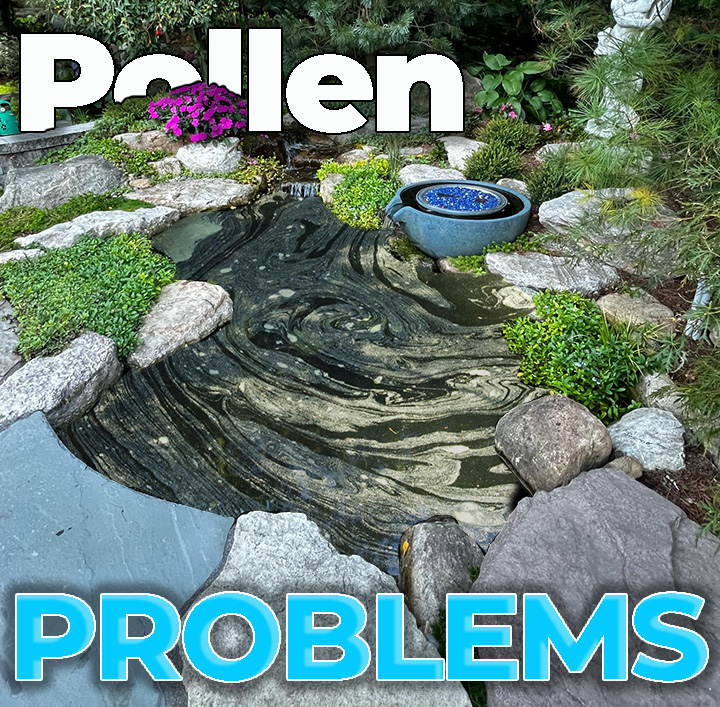
You’ve seen it on your car: that yellow-green dust blanketing everything in sight. Now imagine that same pollen settling on your pond’s surface. It doesn’t just sit there—it dissolves and feeds algae.
Here’s what happens:
-
Nutrient Overload – Pollen adds nitrogen and phosphates to the water, spiking the nutrient levels that algae feed on.
-
Surface Coverage – Pollen can create a film on the pond’s surface, reducing oxygen exchange and increasing water temperature—both of which help algae grow.
-
Ecosystem Imbalance – Pollen throws off the natural balance by overloading your pond faster than beneficial bacteria can compensate.
That’s when you get that familiar, frustrating New Jersey pond green effect—cloudy, murky water and stressed-out fish.
🛠️ 1. Upgrade your pond filtration system
When pollen is driving algae blooms, your filter has to work overtime. Most basic filters just aren’t built for this level of biological stress.
✅ Add a filter bowl or pressure filter with UV clarification
✅ Upgrade to biological filtration to support beneficial bacteria
✅ Clean filters more frequently in spring when pollen peaks
UV clarifiers are especially effective—they destroy algae cells before they can multiply, and combined with strong mechanical filtration, they help restore clear water fast.
👉 Need help choosing the right filter? Explore our filter solutions
💧 2. Install a pond dosing system for daily balance
Even the best filter can’t catch everything—especially when pollen keeps coming. That’s where a dosing system steps in.
A pond dosing system automatically adds:
-
Beneficial bacteria
-
Barley extract
-
Water clarifiers
These ingredients break down organic waste and outcompete algae at the source. Best of all? It runs on autopilot. Just set it, forget it, and let it defend your ecosystem day after day.
👉 We recommend Aquascape’s dosing systems—check them out here
🌿 3. Add aquatic plants to starve algae naturally
Want a solution that’s beautiful and effective? Aquatic plants are your pond’s built-in nutrient filter.
They outcompete algae by:
-
Absorbing the same nutrients algae feeds on
-
Providing shade that reduces sunlight (algae’s fuel)
-
Oxygenating the water to support beneficial bacteria
Top picks for New Jersey ponds:
-
Floating plants: Water lettuce, hyacinth
-
Oxygenators: Hornwort, anacharis
-
Marginals: Pickerel rush, iris, cattails
Once established, plants are your strongest long-term defense against green water in New Jersey ponds.
🌤️ Tired of murky water? Here’s your spring checklist:
✔️ Upgrade your filter with UV
✔️ Set up a dosing system
✔️ Add diverse aquatic plants
✔️ Clean and skim pollen regularly
With these 3 fixes, you’ll have an ecosystem that can stand up to pollen—and keep your pond clear and healthy all season long.
📞 Want expert help clearing your pond this spring?
We’ve helped hundreds of New Jersey pond owners beat the pollen battle. Whether you’re starting fresh or upgrading what you’ve got, we can help.
👉 Contact us today for expert support
👉 Or stop by our pond supply store for filters, plants & more
Looking for more great tips, tricks and quality content? Check out our YouTube Channel!
FAQs About Spring Pond Algae in New Jersey
🏡 Why is spring pond algae so bad in Morris County every year? Morris County’s heavy tree coverage means pollen loads are intense in April and May. That pollen dissolves into pond water and delivers a nutrient spike that triggers spring pond algae blooms fast. A UV clarifier, dosing system, and strong plant coverage working together is the most effective solution. Atlantis Water Gardens serves Morris County pond owners all season long.
🌳 How do I get rid of green pond water fast in Parsippany? For Parsippany pond owners, a UV clarifier is your fastest fix — it destroys suspended algae cells before they can multiply. Pair it with a dosing system running beneficial bacteria and you’ll typically see clear water within one to two weeks. [See how we help Parsippany pond owners →]
🌼 Can aquatic plants really control spring pond algae in Bergen County? Absolutely. With 40-60% surface coverage, aquatic plants starve spring pond algae by absorbing the nutrients it feeds on and shading out the sunlight it needs. For Bergen County ponds, water lettuce, hornwort, and cattails are excellent starting points. Contact Atlantis Water Gardens for plant recommendations tailored to your setup.
🐟 Is pollen really causing my spring pond algae problem in Denville? It’s one of the biggest triggers most Denville pond owners overlook. Pollen carries nitrogen and phosphates directly into your water every day during bloom season, and beneficial bacteria simply can’t keep up without help. A proactive maintenance routine starting before pollen peaks is the best defense. Reach out to Atlantis Water Gardens for a custom spring plan.
💧 When should I start treating for spring pond algae in Passaic County? Start before you see it — ideally as soon as water temperatures hit 50 degrees. Fire up your dosing system, check your filter, and add beneficial bacteria early. Passaic County pond owners who get ahead of spring pond algae by a few weeks have a dramatically easier season. Atlantis Water Gardens can help you build a start-up plan that works.