Pond Planning · New Jersey
Do I Need a Koi Pond Permit in New Jersey? Everything You Need to Know Before You Dig
Getting a koi pond permit in New Jersey is one of the first questions you should ask before your project starts. The answer depends on a few key factors, and getting it wrong can be expensive. Here is what you need to know.
By Jaak Harju · Atlantis Water Gardens · Updated May 2026
A koi pond permit in New Jersey is not always required, but knowing when you need one and when you do not can save you a significant amount of time, money, and frustration. We have been building ponds across Morris, Bergen, Passaic, and Sussex Counties since 2000, and the permit question is one of the first things we walk every client through. The rules are not the same everywhere, and what flies in Denville might require paperwork in Parsippany.
The good news is that most residential koi ponds fall below the threshold that triggers a mandatory permit. The key is knowing where that line is and making sure your project stays on the right side of it before a single shovel hits the ground.
TL;DR
Small ponds under 500 square feet and less than 24 inches deep generally do not require a permit in New Jersey. Larger or deeper ponds, or those near wetlands or waterways, will likely need permits from your local municipality and possibly the NJDEP. Always check with your local zoning office before you start, and work with a contractor who knows the local rules.
1Size and depth determine whether you need a koi pond permit in New Jersey
The most important factors in determining whether your project requires a permit are how big and how deep your pond will be. As a general rule across New Jersey municipalities:
- Ponds under 500 square feet and less than 24 inches deep typically do not require a permit
- Ponds over 500 square feet or deeper than 24 inches will likely trigger a building permit requirement
- Any pond with a dam or structural retaining wall 36 inches or higher requires additional oversight from NJDEP’s Dam Safety and Flood Control division
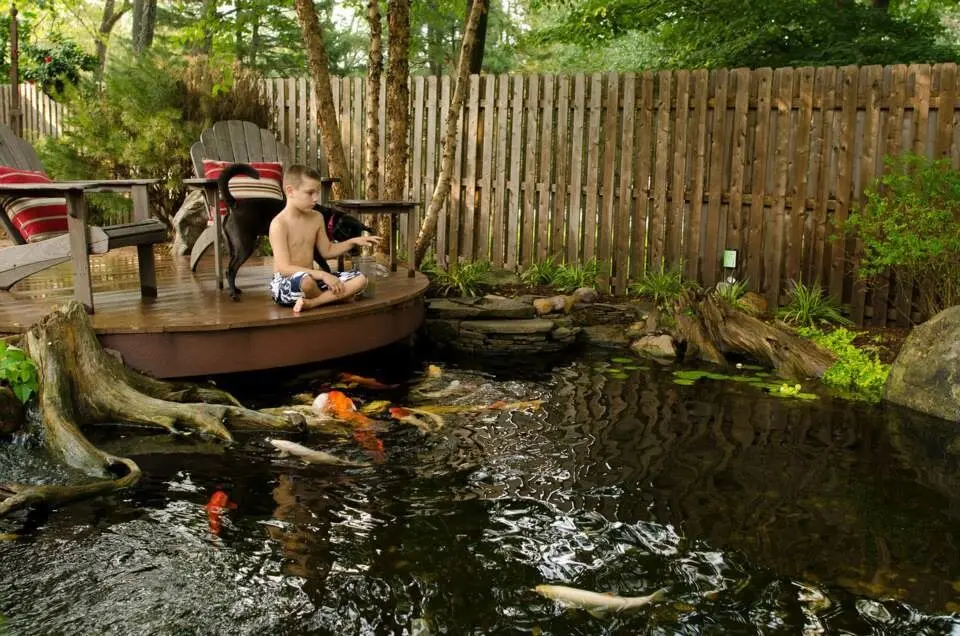
Most backyard koi ponds built for residential use fall well within the no-permit zone. A typical 11×16 foot ecosystem pond is around 175 square feet, well below the 500 square foot threshold. But if you are dreaming big, it pays to check first.
2Local zoning rules vary by municipality
New Jersey gives a lot of discretion to individual municipalities when it comes to zoning and land use. What is allowed without a permit in one town may require paperwork in the next. Some towns in Morris County have specific rules around water features, setback requirements from property lines, or restrictions on excavation depth.
Before you commit to a design or location, contact your local building department or zoning office and describe your project. Give them the approximate size, depth, and location on your property. It is a five-minute phone call that can prevent a very expensive mistake.
Important
Building without a required permit can result in fines, a stop-work order, and potentially being required to remove the pond at your own expense. It can also create complications when selling your home. Always check before you dig.
3Proximity to wetlands or waterways changes everything
If your property is near wetlands, streams, rivers, or other protected natural water systems, the rules change significantly. The New Jersey Department of Environmental Protection (NJDEP) requires permits for any project that could impact those areas, including excavation and grading near their boundaries.
In New Jersey, wetland buffers typically extend 50 to 150 feet from the wetland edge depending on the classification. If your proposed pond falls within that buffer zone, you will need to work with the NJDEP before moving forward. A contractor who knows the state’s environmental regulations can help you identify potential issues before they become costly problems.
- Disturbing wetlands without a permit can result in fines exceeding the cost of the pond itself
- Restoration orders have cost some New Jersey homeowners upward of $20,000
- Even tree removal within a wetland buffer zone can trigger DEP enforcement
4What about adding koi to your pond?
Here is something many New Jersey pond owners do not know: NJDEP regulations require a fish stocking permit to introduce fish into any waters of the state, including private ponds in some interpretations. However, for a contained private backyard koi pond with no connection to natural waterways, most homeowners add koi without issue.
What is absolutely prohibited under NJ law is releasing koi or carp into any public waters of the state. Keep your koi in their pond and you have nothing to worry about. If you ever have questions, the NJDEP Bureau of Freshwater Fisheries can be reached at 908-236-2118.
5Work with a contractor who knows New Jersey’s rules
The single best thing you can do before building a koi pond in New Jersey is work with a contractor who has done it hundreds of times in your area. Not just someone who builds ponds, but someone who has navigated the specific zoning offices, DEP requirements, and local quirks of Morris County, Bergen County, Passaic County, and Sussex County.
At Atlantis Water Gardens, we have been through this process with homeowners across the region since 2000. We know which townships are straightforward and which ones require extra legwork. We can tell you before we ever put a plan on paper whether your project is likely to need permits and how to approach it correctly from the start.
Getting a Koi Pond Permit in New Jersey: Your Quick Checklist
Before your project starts, work through these steps:
- Determine your pond’s planned size and depth
- Call your local building or zoning office to ask about permit requirements for water features
- Check whether your property has wetlands, streams, or DEP-regulated areas nearby
- Visit the NJDEP website to review state environmental regulations if your property borders protected areas
- Work with an experienced local pond contractor who knows the regional rules
Do I need a permit to build a koi pond in New Jersey?
It depends on the size, depth, and location of your pond. Small ponds under 500 square feet and less than 24 inches deep typically do not require a permit. Larger or deeper ponds, or those near wetlands or waterways, will likely require permits from your local municipality and potentially the NJDEP.
What size koi pond does not require a permit in Morris County, NJ?
Generally, ponds under 500 square feet and less than 24 inches deep fall below the permit threshold in most New Jersey municipalities. However, local zoning rules vary, so always check with your local building or zoning office before you dig.
Do I need a permit to add koi to my pond in New Jersey?
For a private backyard koi pond, you typically do not need a fish stocking permit. However, NJDEP regulations prohibit releasing koi into any public waters of the state. Keep your koi in your contained pond and you are fine.
What happens if I build a pond without a permit in Denville or Rockaway, NJ?
Building without a required permit can result in fines, a stop-work order, and potentially being forced to remove the pond at your own cost. It can also cause issues when selling your home. Always check before you dig.
Does Atlantis Water Gardens handle the permit process in New Jersey?
Yes. Atlantis Water Gardens has been building koi ponds across Morris, Bergen, Passaic, and Sussex Counties since 2000. We are familiar with local permit requirements throughout the region and can help guide you through the process before a single shovel hits the ground.
Thinking about building a koi pond and not sure where to start with permits? We have done this hundreds of times across New Jersey. Give us a call and we will walk you through exactly what your project needs before anything gets built.
See it in action
Want to see what a finished koi pond looks like before you commit? Our YouTube channel is full of real builds, before-and-afters, and pond tours from across New Jersey.
Watch our builds on YouTube ↗
Written by Jaak Harju · Atlantis Water Gardens · Serving New Jersey since 2000