Is Your Pond Getting Enough Oxygen This Summer?
Summer is the most demanding season for a koi pond. Fish are eating more and producing more waste. Predators like birds are often more active. The sun is heating up your pond water, making it a haven for bacteria (both good and bad) but also harder for water to hold onto oxygen that fish need.
In short: When the weather heats up, you need to make sure your aeration and filtration systems are operating at peak effectiveness.
If you’re looking for reliable aquascape retail in Union County or just trying to keep your pond healthy through July and August, understanding aeration is the place to start.
Key Takeaways
- Heat Kills Oxygen: Warm water loses dissolved oxygen fast — aeration is the most important thing you can do for fish health in summer.
- Waterfalls Increase Oxygen: Waterfalls are one of the most effective natural filtration and aeration tools in a pond.
- Use Multiple Sources: Multiple aeration sources working together gives you the most reliable oxygen levels, especially during the hottest months.
Why Does Summer Heat Hurt Oxygen Levels?
Water and oxygen have an inverse relationship with temperature. The warmer your water gets, the less dissolved oxygen it can hold. During a New Jersey heat wave, pond temperatures can climb into the mid-to-upper 80s. When that happens, oxygen levels can drop fast enough to stress or kill fish.
Why Your Pond Works Harder in Summer
- Higher fish metabolism (more eating, more breathing)
- Increased bacterial activity breaking down waste
- Algae consuming oxygen at night
- Organic debris decomposing in the water
Your aeration system has to keep up with all of it at once.
How Waterfall Pond Filtration and Aeration Work Together
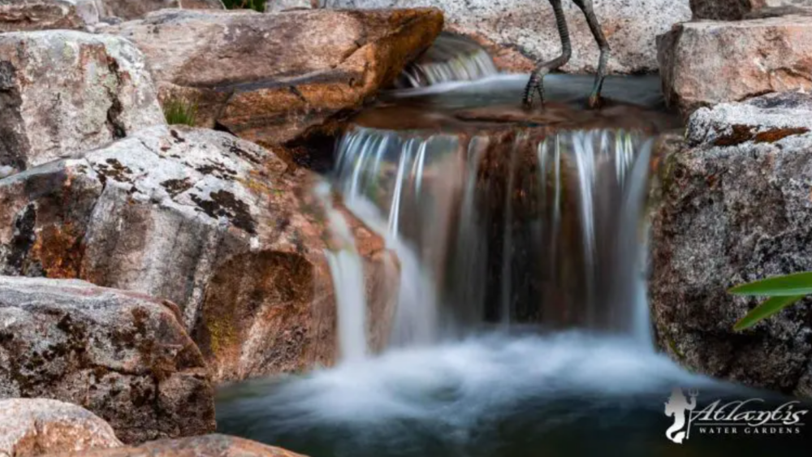
In a healthy ecosystem pond, your waterfall is doing the heavy lifting. It’s the final step of your filtration cycle. After the skimmer grabs the leaves and the bio-filter cleans the toxins, that water crashes down the rocks, grabbing oxygen from the air and helping put it back into your pond.
What Makes a Waterfall More Effective at Aeration?
- Wider spillways create more surface area for gas exchange
- Greater drop height produces more turbulence
- Shallow, rocky streams add extra splashing along the run
- Running the pump continuously, especially overnight
Oxygen levels drop lowest at night, when aquatic plants stop producing oxygen and begin consuming it. Shutting the waterfall off overnight removes your primary aeration source at the worst possible time.
Is a Waterfall Enough on Its Own?
For many ponds, a properly sized waterfall and filter handles aeration well through most of the year. Summer is a different story.
On the hottest days — especially with a high fish load, full sun exposure, or a deep pond — a dedicated aerator gives you a backup oxygen source that runs independently of your main pump. An aerator pushes air through a diffuser placed at the pond bottom, agitating the surface and oxygenating the full water column, not just near the waterfall.
When to Add and Aerator
- Your pond is 8 feet deep or more
- You have a higher-than-average fish load
- Your pond gets 6+ hours of direct sun daily
- You’ve had fish stress or losses in previous summers
A small aerator is inexpensive to run and can make a real difference on a 90-degree afternoon.
How Do I Know If My Pond Has Enough Oxygen?
Your fish will often tell you before any test does.
The clearest sign of low dissolved oxygen is fish gasping at the surface or clustering near the waterfall. This is called “piping” and it shouldn’t be ignored. Other warning signs include:
- Fish that are lethargic and skipping meals
- Increased surface activity in early morning (oxygen is lowest at dawn)
- Multiple fish showing stress simultaneously
You can also test directly with a pond water test kit. Koi and goldfish do best at 7 mg/L or higher. Below 6 mg/L causes stress. Below 4 mg/L is dangerous.
What to Do Next
Check your waterfall and pump
- Confirm the pump is moving the correct volume for your pond size (typically full pond volume once per hour)
- Clean the skimmer basket and inspect the biological filter media
- Look for reduced waterfall flow, which can signal a clogged filter or failing pump
Add a dedicated aerator if you haven’t already
- Place an air diffuser at the deepest point of your pond and run it continuously through summer, especially overnight.
Watch your fish
Piping, lethargy, or waterfall clustering in the morning means test your water immediately (dissolved oxygen, ammonia, and pH) before changing anything else.
Safety Note
Never add large amounts of untreated tap water to a pond. Always detoxify and temperature-match before adding water.
Ready to Upgrade Your Pond Aeration? Call Atlantis Water Gardens
Whether you need a system inspection or you’re ready to install a new pump to keep up with the summer heat, Atlantis Water Gardens can help set up your pond so that it’s ready for the weather. Our team has been building and maintaining ponds across New Jersey for over 20 years.
Keep your pond healthy through the hottest months — contact our team today for expert summer pond aeration support and service.
📞Call: 973-627-0515
FAQs
Why are my koi hanging around the waterfall all day?
That’s where oxygen levels are highest. You should check your water for dissolved oxygen, ammonia, and nitrite to rule out a water quality problem. If the behavior is new or intensifying, your aeration likely isn’t keeping up, especially during a heat wave.
How often should I clean my waterfall filter in summer?
Rinsing your filter media every 3-4 weeks is a reasonable baseline. If water clarity drops or flow decreases, check it sooner.
What’s the difference between an aerator and a waterfall for pond aeration?
A waterfall aerates by agitating the water’s surface as it falls. An aerator pushes air into the water from the bottom up, oxygenating the full water column. Both methods complement each other, and running both gives you the most reliable dissolved oxygen levels through summer. Especially for deeper ponds where lower layers can become depleted without bottom aeration.

Founder & Master Pond Builder
Jaak Harju is the founder and master pond builder of Atlantis Water Gardens, a family-owned design and build firm specializing in natural-looking ponds, waterfalls, and ecosystem water features. Since 2000, Jaak has dedicated his career to creating outdoor environments that inspire connection with nature.
With a background in landscape design and construction, Jaak brings artistry and precision to every project. He’s known nationally for his creative stonework, ecological pond design, and educational outreach within the pond-building community. Through his work, videos, and collaborations with other Aquascape-certified contractors, Jaak has helped redefine backyard water features as sustainable, living ecosystems.