Pond Care · Water Quality
Not All Pond Algae Is Bad. Here’s What Your New Jersey Pond Actually Needs.
Not all pond algae is bad, and understanding the difference can change how you care for your pond entirely. Some algae is a sign of a healthy, thriving ecosystem. The goal was never to eliminate it. It was always to keep it in balance.
By Jaak Harju · Atlantis Water Gardens · Updated May 2026
Not all pond algae is bad. We know that might feel counterintuitive if you have spent any amount of time battling green water or pulling string algae out of your filter, but bear with us. Algae is a natural, living part of any pond ecosystem, and a certain amount of it is not just acceptable. It is actually beneficial for your fish, your water quality, and the overall health of your pond.
The problem is not algae itself. The problem is algae out of control. Understanding the difference between algae that is working for your pond and algae that is working against it is one of the most useful things a New Jersey pond owner can know.
TL;DR
A thin coating of algae on rocks and liner is healthy and protective. String algae in moderate amounts benefits water quality and provides a surface for good bacteria. Green water in small amounts during spring is normal. The algae to watch for is blue-green algae, which can be toxic, and any bloom so large it depletes oxygen or clogs your filtration.
Not All Pond Algae Is Bad: The Types Worth Knowing
There are two main types of algae in a pond environment, and understanding what each one does changes how you respond to them.
1The green film on your rocks and liner is a good sign
That thin green coating you see on the sides of your pond, on the rocks at the bottom, along the waterfall edges? That is periphyton, and it is exactly what a healthy pond looks like. Not all pond algae is bad, and this type is proof. It is a natural biofilm that protects surfaces, feeds grazing fish, and indicates your pond is biologically active and well-established.
Koi actually love to graze on this film. It gives them a natural foraging behavior that keeps them stimulated and contributes real nutritional value to their diet. Algae contains vitamins, minerals, and trace elements that supplement commercial koi food and can contribute to healthier growth and more vibrant coloration. Leave it alone.
2String algae in moderate amounts actually helps your pond
String algae, also called filamentous or hair algae, gets a bad reputation. And in excess it earns it. But in moderate amounts, not all pond algae is bad, and string algae is a good example of why. It acts as a natural biofilter by providing surfaces for beneficial bacteria to colonize and grow. Those bacteria are the engine of your nitrogen cycle, breaking down waste and keeping ammonia levels in check.
String algae also absorbs excess nitrates and phosphates directly from the water, competing with the less desirable free-floating algae that causes green water. It is doing real filtration work. A modest amount growing along your waterfall or on your rocks is a sign of a biologically active, well-cycled pond.
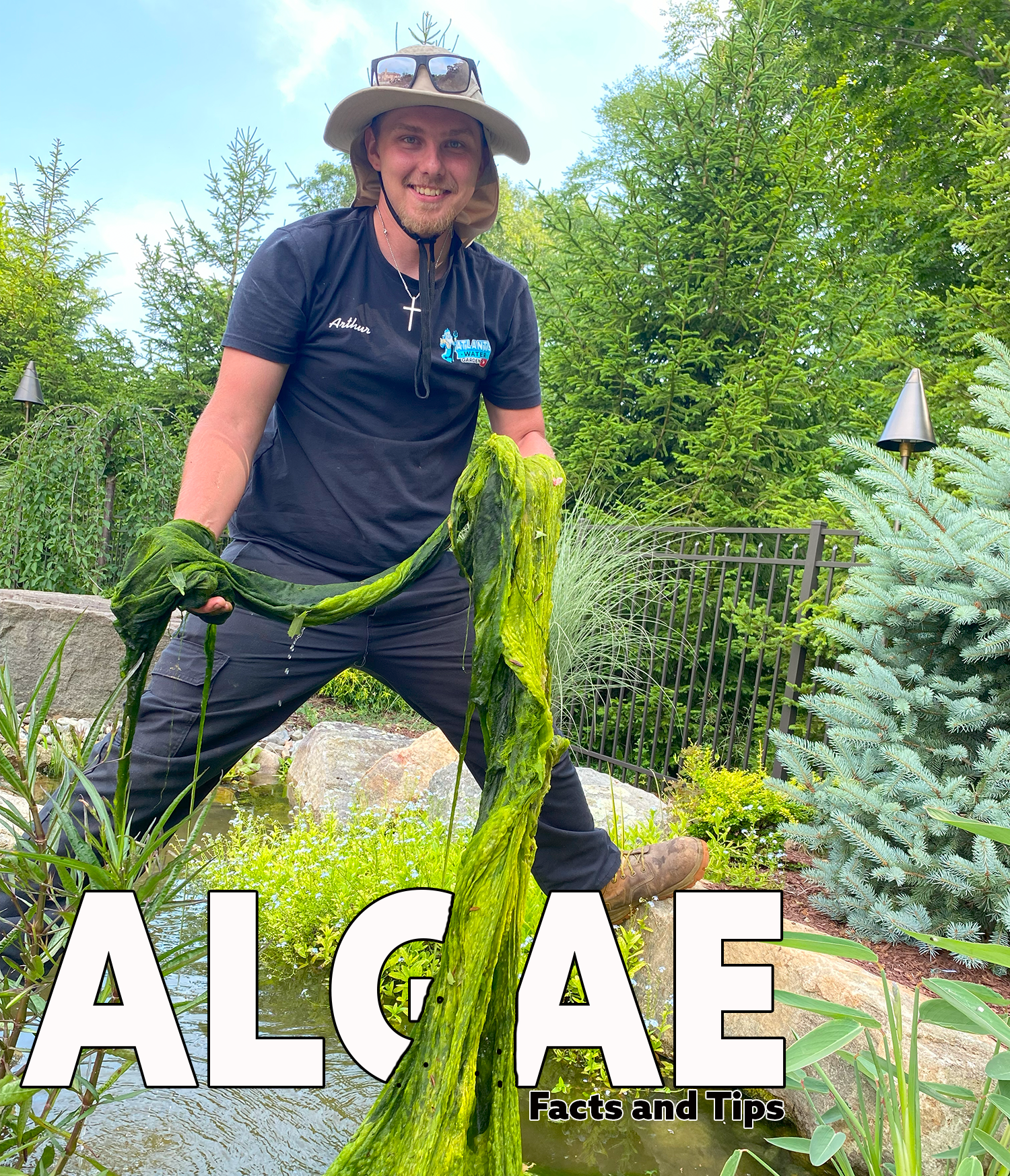
The key word is modest. When it starts to accumulate in thick mats, clog your filter, or smother your plants, it needs to be managed. Pull it out by hand, let it dry, and use it as garden fertilizer. It is loaded with nutrients.
3The spring bloom is nature doing its job
Every spring across Morris County and the rest of New Jersey, pond owners watch their clear water turn green seemingly overnight. It is alarming if you do not know what is happening. But in most cases, not all pond algae is bad here either. That spring green water bloom is nature filling a temporary gap.
Over winter, your beneficial bacteria colony dwindles. When water temps rise in spring, algae reacts faster than bacteria can reestablish itself. Algae jumps in to do the filtration work in the meantime, absorbing excess nitrogen and phosphorus before your bacterial colony catches up. It is the pond’s way of maintaining balance while its systems come back online.
In a well-managed pond, this bloom typically resolves on its own within a few weeks as beneficial bacteria reestablishes and plants fill back in. Patience and consistency with your bacteria treatments will see you through it.
4Algae oxygenates your water during daylight hours
During the day, algae undergoes photosynthesis just like any other plant. That process produces oxygen directly into the water, which benefits every living thing in your pond. In a naturally balanced pond, this is a meaningful contribution to dissolved oxygen levels, especially in warmer months when oxygen levels naturally drop.
The important caveat is that the process reverses at night. After dark, algae consumes oxygen instead of producing it. In a pond with a very heavy bloom, this overnight oxygen depletion can stress or even endanger your fish. This is why balance matters and why a moderate amount of algae works with your pond while a heavy bloom works against it.
When Pond Algae Stops Being Beneficial and Starts Being a Problem
Not all pond algae is bad, but some of it is. Here is what to watch for:
- Green water so heavy you cannot see your fish, which signals filtration or nutrient issues that need addressing
- String algae thick enough to clog pumps and filters or smother aquatic plants
- A blue-green or gray-green tint to the water with a foul smell, which is blue-green algae and can produce toxins harmful to fish and people
- Algae growth so heavy it depletes oxygen overnight and you find fish gasping at the surface in the morning
Watch Out For This
Blue-green algae is not actually algae at all. It is cyanobacteria, and certain strains produce toxins that can be harmful to fish, pets, and people. If your water has a blue-green or gray-green tint, smells musty or like rotting vegetation, or has a surface scum that looks like spilled paint, take it seriously and contact a pond professional.
Is algae in my koi pond bad?
Not all pond algae is bad. A moderate amount of algae is a natural and healthy part of any pond ecosystem. It oxygenates the water, feeds beneficial bacteria, supplements your koi’s diet, and indicates your pond is biologically active. Problems only arise when algae grows out of control.
What is the difference between good and bad pond algae in New Jersey?
Good algae includes string algae in moderate amounts and the thin green film that coats rocks and liner surfaces. Bad algae includes uncontrolled green water blooms that block visibility, thick mats of string algae that clog filters, and blue-green algae which can produce toxins harmful to fish and people.
Can koi eat algae in a New Jersey pond?
Yes. Koi naturally graze on algae and it is actually good for them in moderation. Algae contains vitamins, minerals, and trace elements that supplement commercial koi food and can contribute to healthier growth and more vibrant color. It also satisfies their natural foraging instincts.
Should I remove all algae from my Morris County pond?
No. Removing all algae from your pond would actually disrupt the ecosystem. A thin coating on rocks and liner surfaces is healthy and protective. The goal is balance, not elimination. Focus on preventing excess growth rather than trying to achieve a completely algae-free pond.
When does pond algae become a problem in New Jersey?
Algae becomes a problem when it grows out of control. Heavy green water blooms can deplete oxygen overnight and stress or kill your fish. Thick string algae mats can clog pumps and filters. Blue-green algae can produce toxins. Excessive algae is also usually a sign that something in your pond is out of balance.
Not sure if what you are seeing in your pond is normal algae or something that needs attention? Give us a call. We have been caring for ponds across Morris, Bergen, Passaic, and Sussex Counties since 2000 and we are happy to help you figure it out.
See it in action
Want to see what a healthy, balanced New Jersey pond looks like up close? Our YouTube channel is packed with real builds, pond tours, and maintenance content from the crew.
Watch our builds on YouTube ↗
Written by Jaak Harju · Atlantis Water Gardens · Serving New Jersey since 2000